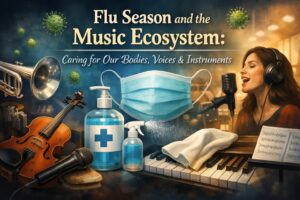
As conversations continue around the flu returning with greater intensity, it is important for musicians and families involved in music education to understand how seasonal illness uniquely affects the music ecosystem. Music is deeply physical, involving breath, touch, shared spaces, and close interaction between students, teachers, instruments, and environments. Because of this, flu awareness in music settings goes beyond general health concerns and becomes part of responsible musicianship.
For instrumentalists, especially those who use breath to create sound, the flu can directly impact both performance and instrument care. Wind and brass instruments rely on airflow, moisture, and repeated contact with the mouth and hands. When a student is sick, moisture buildup inside an instrument can carry germs if proper cleaning habits are not followed. Regular swabbing, wiping down keys and valves, and keeping cases clean and dry helps protect both the player and the instrument. Instruments should be treated as personal equipment, not shared casually, and mouthpieces should always be cleaned thoroughly and handled with care.
String and percussion players are also part of this ecosystem. Hands are the primary connection to the instrument, and during flu season, clean hands and regularly wiped surfaces make a meaningful difference. Fingerboards, strings, drumsticks, mallets, and practice pads benefit from gentle cleaning to reduce buildup from daily use. Instrument cases often go overlooked, yet they travel from home to school to lessons and performances, carrying whatever they come into contact with. Keeping cases clean and aired out supports both instrument longevity and overall health.
Voice students face a different but equally important set of considerations. The voice is an instrument that lives inside the body, and flu-related illness can strain vocal cords, reduce breath support, and cause long-term damage if singers push through sickness. Rest becomes part of vocal discipline during flu season. Hydration, sleep, and listening to the body are essential practices for singers at every level. Singing while sick not only slows recovery but can also affect tone, range, and endurance. Healthy voice care includes knowing when not to sing and giving the body time to heal.
Music education also thrives in shared spaces. Lesson rooms, rehearsal areas, churches, schools, and performance venues are places where sound and people come together. During flu season, awareness and consideration protect the entire community. Staying home when symptoms appear, practicing good hygiene, and communicating openly with teachers and directors helps keep music environments safe and productive. This kind of awareness ensures that learning continues without unnecessary disruption.
At Tupelo Music Academy, music is viewed as both an art and a responsibility. Caring for instruments, protecting voices, and prioritizing health are all part of developing strong, confident musicians. Families play a vital role in this process by helping students understand that staying healthy supports better learning, better sound, and a stronger music community. When families, students, and educators work together with shared awareness, music remains a place of growth, creativity, and connection even during flu season.
Flu awareness is not about fear, but stewardship of our bodies, our instruments, our voices, and the spaces where music lives. By taking thoughtful steps and staying informed, musicians and families can continue to learn, perform, worship, and create with confidence while protecting the health of the entire music ecosystem.
Terrence & The TMA Team